


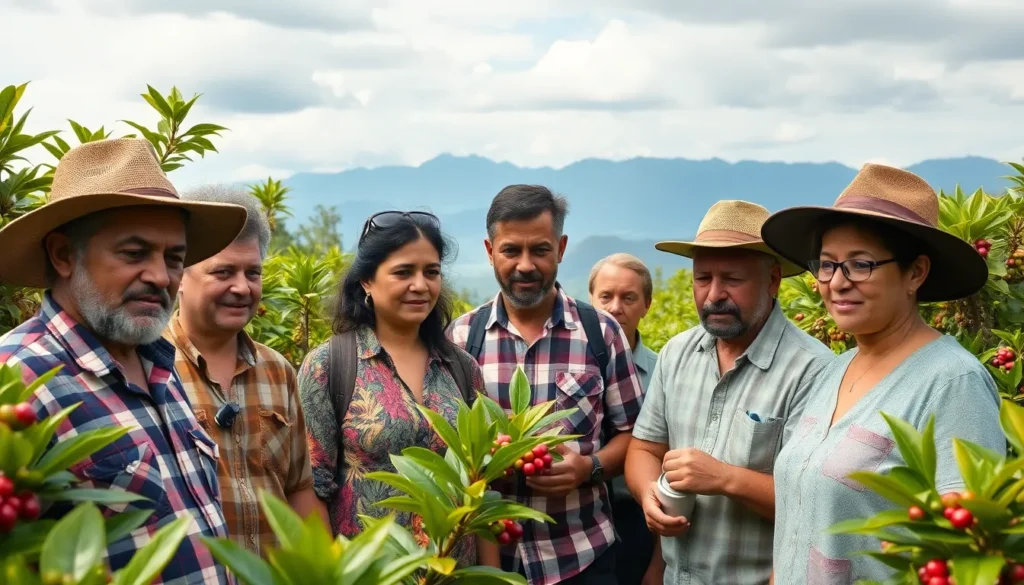
Coffee lovers around the world might not realize that their daily brew faces a brewing crisis. Climate change is reshaping coffee production, threatening the delicate ecosystems where coffee plants thrive. Rising temperatures, unpredictable rainfall, and increased pests are creating a perfect storm that could drastically alter the landscape of coffee farming.
As coffee plants struggle to adapt, farmers are confronted with tough choices about sustainability and crop viability. The impact ripples beyond agriculture, affecting economies and communities that rely on coffee as a livelihood. Understanding the connection between coffee and climate change is crucial for consumers and producers alike, as it highlights the urgent need for action to protect this beloved beverage and the environment.
Overview of Coffee and Climate Change
Climate change significantly impacts coffee production. Rising temperatures cause varietal shifts, leading to decreased yields. Data indicates that for every 1°C increase in temperature, coffee yields can drop by 10% to 20%. Unpredictable rainfall patterns affect water availability, stressing plants and reducing quality.
Pests and diseases thrive in warmer climates. For instance, increased incidences of coffee leaf rust are evident in Latin American regions, compromising crop health and farmers’ livelihoods. Adaptation strategies become critical as traditional farming methods face dismissal due to these challenges.
Farmers confront barriers in implementing sustainable practices. Limited resources and access to information hinder adaptation efforts. Economic pressures mount as global coffee prices fluctuate amid these environmental changes, impacting rural communities reliant on coffee for income.
Addressing the link between coffee and climate change demands immediate action. Collaborative efforts among stakeholders, including producers, policymakers, and consumers, become essential for mitigating adverse effects and ensuring coffee’s future.
Impact on Coffee Production
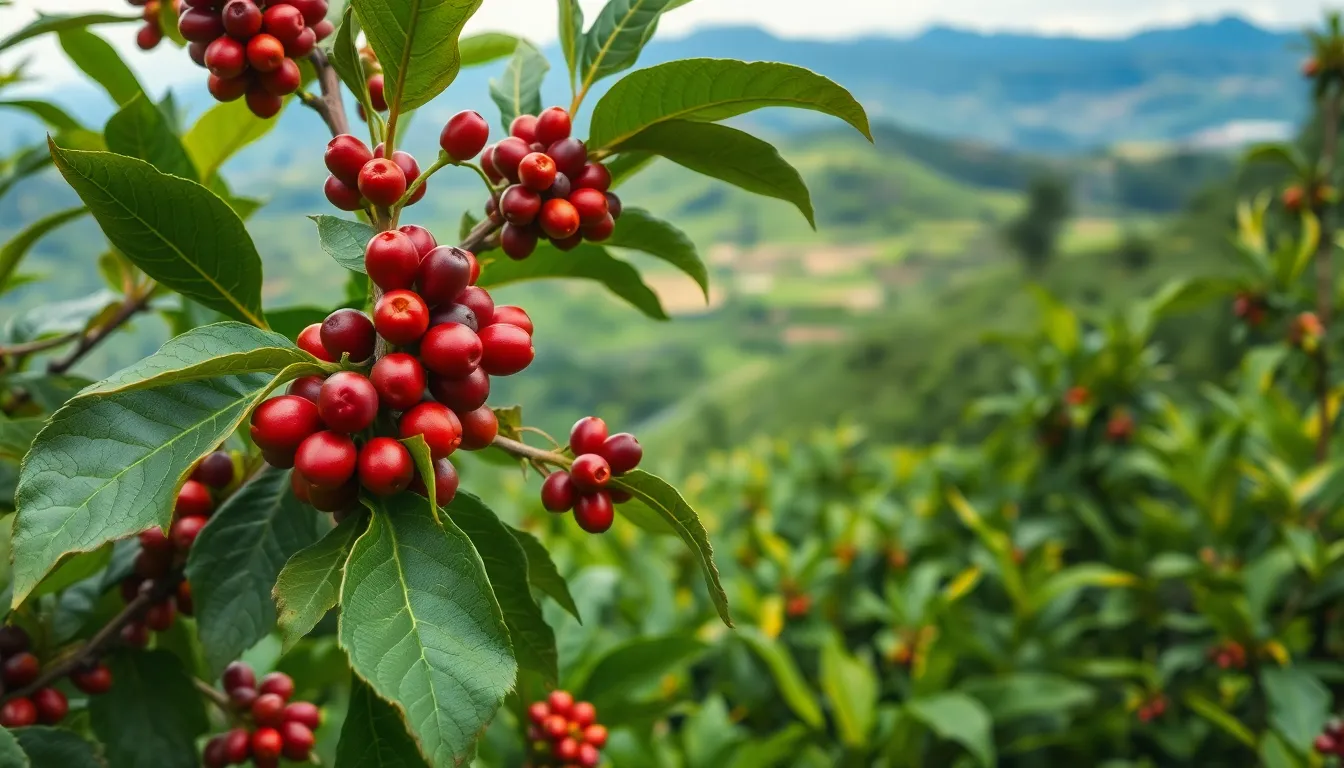
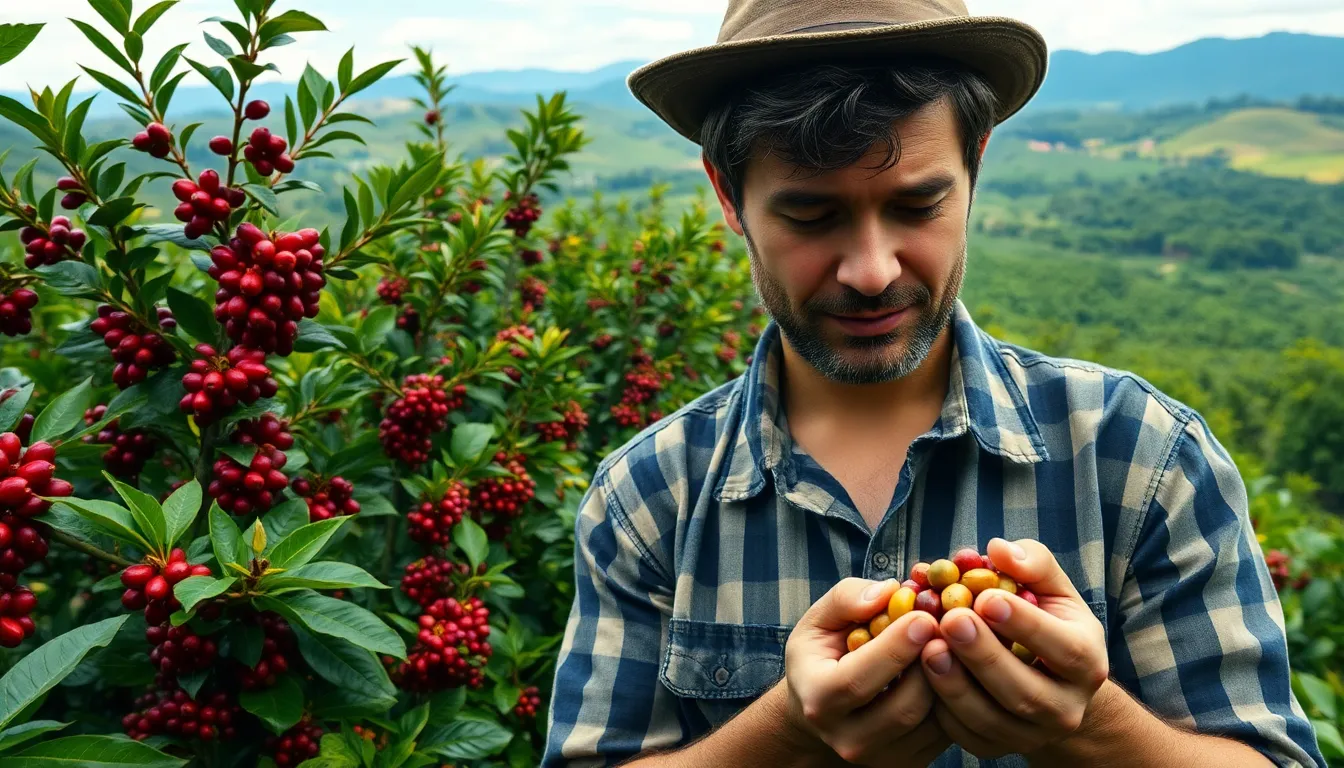
Climate change significantly impacts coffee production, altering both growing conditions and quality. The changing climate poses threats that jeopardize the future of coffee cultivation.
Changes in Growing Conditions
Temperature increases and erratic rainfall patterns directly affect coffee cultivation. Research indicates a 1°C rise in temperature can decrease yields by 10% to 20%. Optimal growing conditions for coffee plants exist within specific temperature ranges, typically between 15°C and 24°C. As temperatures exceed these limits, plants experience stress that reduces their productivity.
Moreover, changes in rainfall patterns lead to water scarcity or excessive moisture, creating unsuitable conditions for coffee growth. Regions previously ideal for coffee production find themselves facing new challenges. For instance, traditional coffee-growing areas in Brazil and Colombia see shifts in cultivable land, pushing farmers to relocate to higher altitudes or new regions. Unfortunately, these adaptations aren’t always viable due to economic and logistical constraints.
Effects on Coffee Quality
Climate change compromises coffee quality alongside production levels. Fluctuating weather results in inconsistent flavor profiles and lower quality beans. Factors such as temperature and humidity considerably influence the development of sugars and acids in coffee cherries, which are crucial for flavor.
Increased pest populations, driven by climate change, also threaten coffee quality. Specifically, coffee leaf rust and other diseases can decimate crops, leading to inferior beans. Studies show that plants under stress from climate-related factors yield beans with higher defects, affecting their marketability. As farmers face difficulties maintaining quality, consumer preferences for excellence remain unfulfilled, potentially jeopardizing the global coffee market.
Economic Implications
Climate change poses significant economic threats to coffee production, impacting prices, growers, and overall market stability. The interplay between climate conditions and market dynamics creates challenges for stakeholders at every level.
Price Fluctuations
Price fluctuations in the coffee market result from various climate-induced factors, including decreasing yields and inconsistent quality. As temperatures increase and adverse weather patterns persist, coffee production costs rise, driving up retail prices. For instance, in recent years, prices have experienced volatility, often correlating with reports of crop failures due to climate impacts. Producers’ margins shrink as they struggle to cover expenses amidst insufficient yields, leading to uncertainty in pricing structures.
Impact on Farmers
Farmers face profound economic repercussions as climate change diminishes coffee yield and quality. Reductions of 10% to 20% per 1°C increase disrupt income stability for growers, especially in vulnerable regions where coffee cultivates livelihoods. Increased expenses for pest management and adaptation strategies strain already limited budgets. Many farmers experience heightened risk of crop failure, forcing them to reconsider sustainable practices and seek alternative income sources. As rural communities rely heavily on coffee, these challenges threaten local economies and exacerbate poverty. Improved access to resources and support systems remains critical for farmers to navigate these evolving economic landscapes.
Mitigation Strategies
Mitigation strategies play a crucial role in combating the adverse effects of climate change on coffee production. Implementing sustainable practices and leveraging technological innovations can significantly enhance resilience and ensure the viability of coffee farming.
Sustainable Farming Practices
Sustainable farming practices provide a pathway for adapting to climate change. Methods such as agroforestry integrate coffee cultivation with tree planting, enhancing biodiversity and creating microclimates that protect coffee plants from extreme weather. Crop rotation improves soil health and reduces pest populations. Using organic fertilizers fosters soil fertility and decreases dependence on chemical inputs. Furthermore, shade-grown coffee enhances resilience by protecting plants from excessive heat and regulating moisture levels. These practices not only improve yield and quality but also promote long-term ecological stability, benefiting both farmers and the environment.
Technological Innovations
Technological innovations offer powerful solutions for addressing climate challenges in coffee production. Precision agriculture, which uses sensors and data analytics, optimizes water usage and nutrient management, promoting efficient resource use. Climate-smart technologies, such as drought-resistant coffee varieties, enable farmers to adapt to changing weather patterns. Mobile applications provide farmers with real-time weather forecasts, enabling them to make informed decisions regarding planting and harvesting. Additionally, post-harvest processing technologies enhance coffee quality and reduce waste, improving market competitiveness. These innovations empower farmers to combat climate impacts and ensure sustainable profitability in an evolving landscape.
Future Outlook
Climate change poses significant challenges to the future of coffee production. Predictions indicate that coffee-growing regions will increasingly shift, with many becoming less suitable for cultivation due to rising temperatures and altered rainfall patterns. Research shows that coffee yields may decline by 10% to 20% for every 1°C increase in temperature, compelling producers to adapt rapidly to changing conditions.
Adaptation strategies will play a crucial role in sustaining coffee agriculture. Sustainable farming techniques, such as agroforestry and organic practices, offer ways to enhance productivity while preserving ecological balance. Key innovations, including climate-resilient coffee varieties and precision farming tools, stand to improve resource management effectively, assisting farmers in optimizing yield and quality.
Farmers will require support to implement these strategies effectively. Financial assistance, education, and access to technology are vital components that can empower coffee growers. Collaborative efforts among governments, NGOs, and industry stakeholders can create supportive frameworks that help mitigate risks associated with climate change.
Consumer awareness also impacts the future of coffee. Increasing demand for sustainably produced coffee can incentivize farmers to adopt better practices. Transparency in sourcing and marketing high-quality, sustainably grown products appeals to socially conscious consumers, driving a market shift toward resilience.
The overall economic viability of coffee production will hinge on these adaptations. As climate-induced challenges continue to evolve, sustained effort in research, technology, and local support will prove essential for ensuring a viable coffee industry.